Show Up On Site
Engineers review duty cycles where the machines actually work.
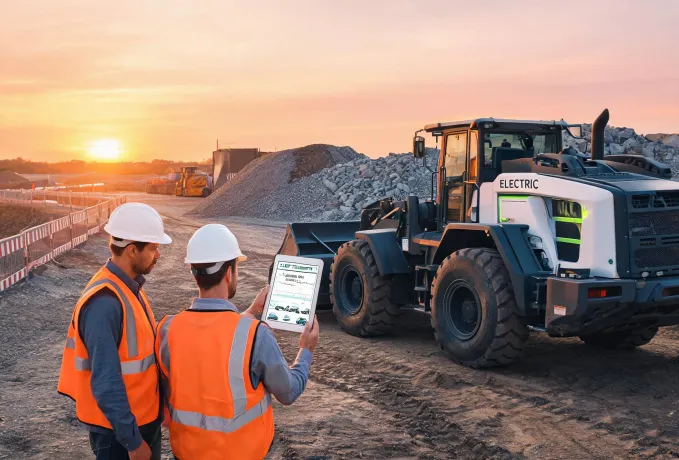
VolvoBuild CE grew from a field engineering desk that helped contractors choose machines by production data, not catalog habit. The company still sends senior engineers to quarry, paving and urban earthmoving sites when a fleet decision will shape cost for years.
The founding idea was simple: a construction machine should be specified with the same discipline as the civil works it supports. Bucket size, track group, battery capacity, route grade, charging window, service access and emissions reporting all belong in the same conversation. That is why VolvoBuild CE pairs each equipment proposal with an operations worksheet and a service path before the first purchase order is drafted.
If a contractor is asked to cut carbon, protect uptime and still move the same cubic meters, the machine supplier has to sit at the planning table, not just at the handover ceremony.
Today the company supports electric excavators, loaders, articulated haulers and mixed fleets across global infrastructure projects. Its teams combine mechanical service, telematics onboarding, battery duty-cycle review and traditional component rebuild practice. That mix keeps the brand future-led without losing the practical habits that contractors value: documented intervals, clear parts availability and service people who understand production pressure.
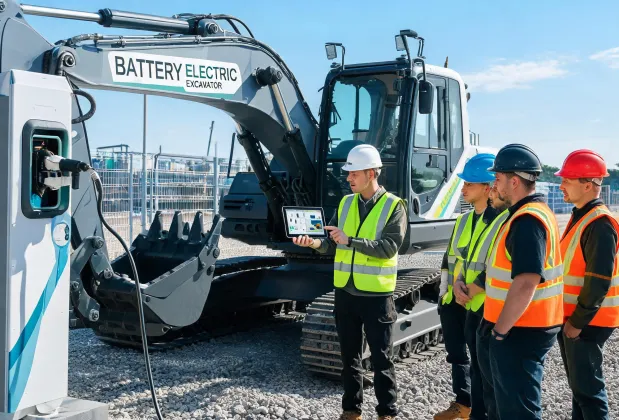
VolvoBuild CE runs hands-on sessions for owner-operators moving from diesel excavators to electric compact and mid-class machines. Crews learn charging discipline, idle management, safe isolation, hydraulic warm-up and how to read telematics alerts without slowing the shift. The program is built for practical workers, so every module ends in the cab rather than in a slide deck.
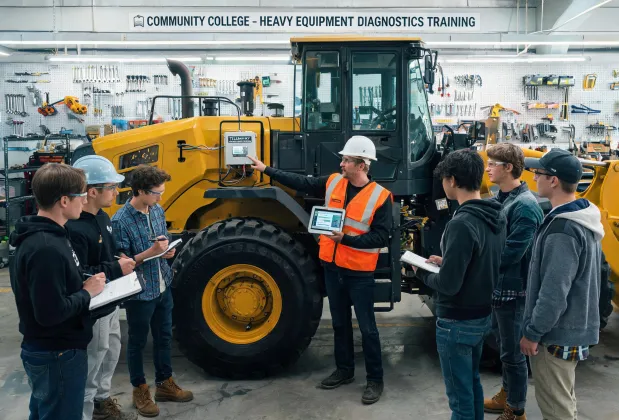
Retired loaders, simulator seats and used telematics gateways are donated to trade programs so young mechanics can diagnose modern construction equipment before they enter the field. The goal is a stronger service labor pool for contractors who now need mechanical, electrical and data skills in the same workshop.
Tell us the site type, machine class and production target. We will map the service and electrification assumptions before the fleet decision is locked.